-
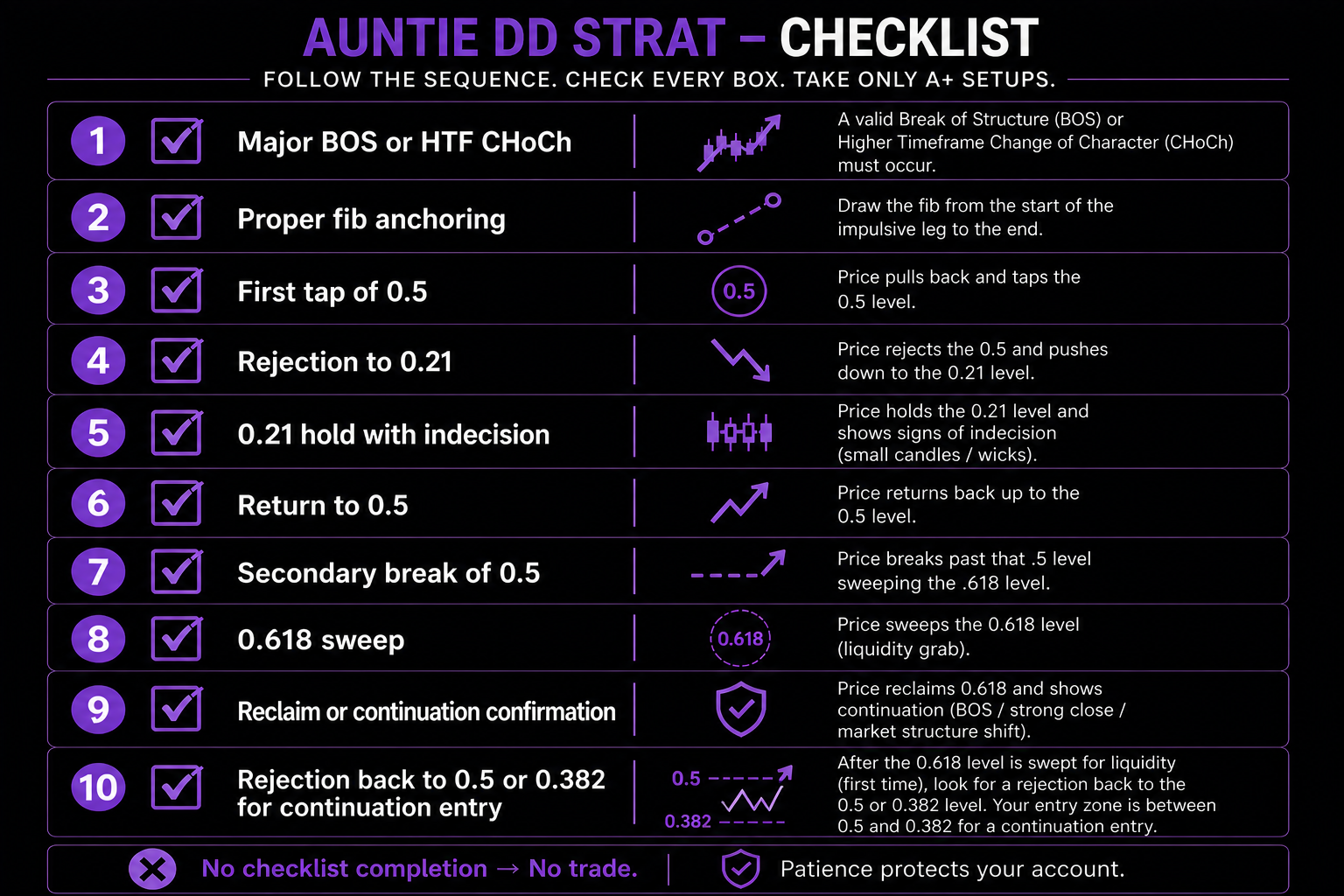
What You’re Watching For:
Price retraces into the 0.5 level
Rejects from 0.5
Moves to the 0.21 level
Shows indecision or doji candles at 0.21
Rejects back towards 0.5
This creates:
A liquidity sweep
A support confirmation
A compression between 0.21 and 0.5
Key Concept:
The 0.21 must HOLD with visible reaction.
If price slices through 0.21 cleanly?
The setup weakens.
Important Rule
If price pushes directly to 0.618 during the FIRST interaction with 0.5…
It is NOT a valid Auntie DD setup.
Why? Because the reaction structure is missing.
We need the 0.5 → 0.21 → 0.5 sequence first. -
Now we want the SECOND touch of 0.5. Why?
Because this is where liquidity gets engineered.
On this second interaction:
We want to see:Price break below 0.5
Sweep toward or slightly through 0.618
Then either:
A) Reclaim back above 0.5 or 0.382
OR
B) Fail and close below 0.618This determines continuation.
What Makes It Valid?
You want:0.618 to get swept on the SECOND 0.5 interaction
Not during the first
Reaction around 0.618
Structural respect
This is the confirmation of real continuation.
-
Secondary 0.5 Tap → 0.618 Liquidity Sweep
Bullet Points:Second test of 0.5
Break under 0.5
Sweep of 0.618
Watch reaction
Reclaim = continuation
Failure = breakdown
The second touch reveals intent.
-
This strategy is not about Fibonacci.
It’s about:Liquidity engineering
Trap creation
Reaction confirmation
Continuation structure
0.5 = equilibrium
0.21 = support confirmation
0.618 = liquidity sweep trigger
You are watching how price behaves around these zones.
-
What to Look For:
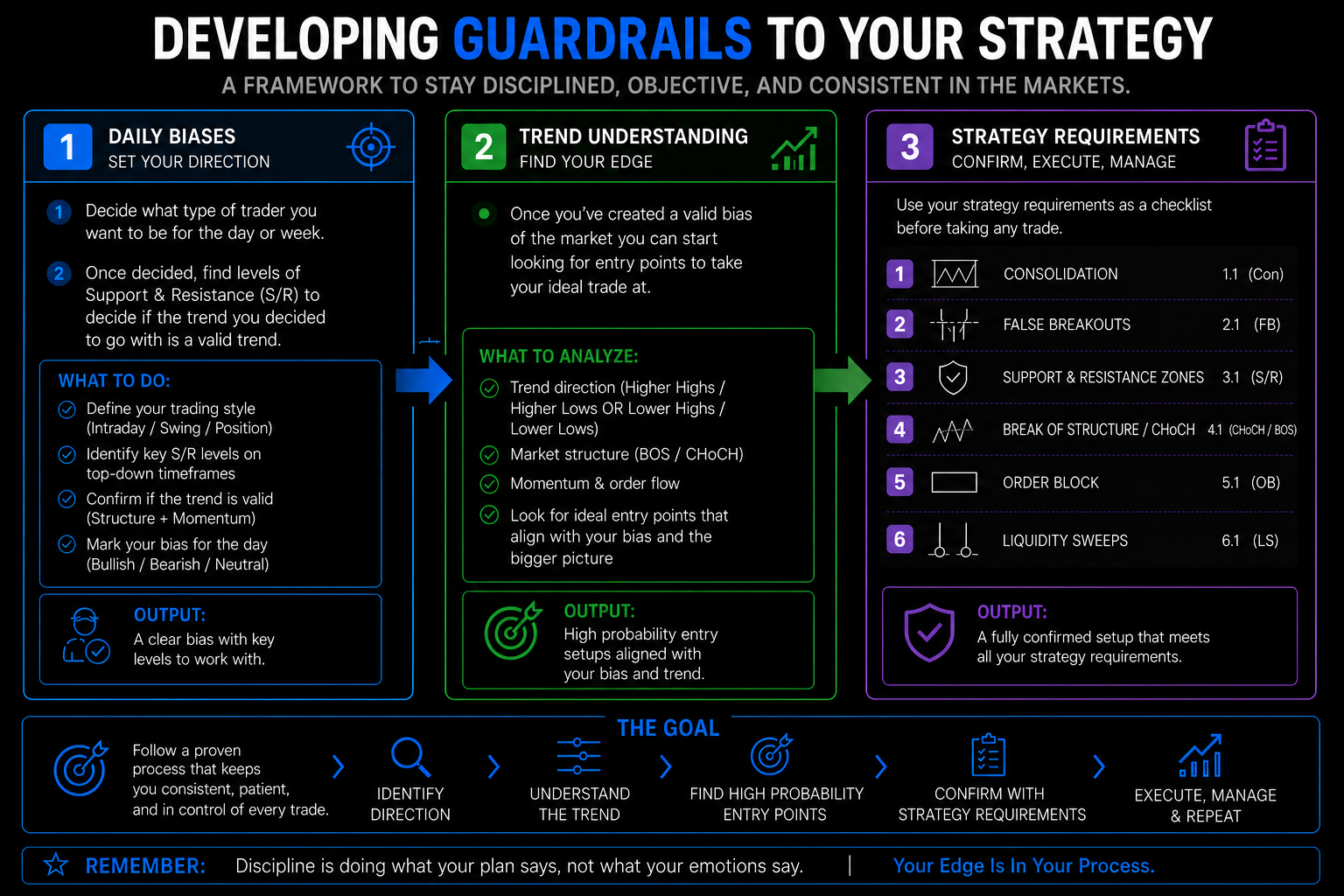
Price moving in a tight range with repeated reactions, small-bodied candles, overlapping movement, or compression that suggests energy is building.
Why It Matters:
Consolidation often signals accumulation of orders and liquidity. Pressure builds in these zones, and once released, can create strong directional moves. -
What to Look For:
Price breaking above or below the consolidation range, then quickly rejecting back inside with strong wicks or displacement in the opposite direction.
Why It Matters:
False breakouts trap impatient traders and sweep liquidity. Recognizing this helps you avoid chasing the fake move and positions you for the real expansion. -
What to Look For:
Clear reaction zones from higher timeframes where price has historically rejected, consolidated, or aggressively moved away from.
Why It Matters:
These levels provide context. A Pressure Cooker setup forming near meaningful S/R has more weight than one forming in random price territory. -
What to Look For:
A clean break of a recent swing high or low, or a visible shift in market character showing momentum changing hands.
Why It Matters:
This confirms the market may be transitioning from compression into directional movement instead of remaining range-bound. -
What to Look For:
The final bullish or bearish candle before the impulsive move that created displacement out of consolidation.
Why It Matters:
Order blocks often act as institutional reaction points. If price revisits them, they can offer cleaner confirmations or refined entry zones. -
What to Look For:
Price taking out equal highs, equal lows, previous session levels, or obvious stop clusters before reversing.
Why It Matters:
Markets frequently grab liquidity before making the intended move. Identifying sweeps helps you avoid becoming the exit liquidity for stronger participants.